
Eating Patterns
Processed Food Reliance and the Quiet Weight Shift
Eleanor Whitfield
·
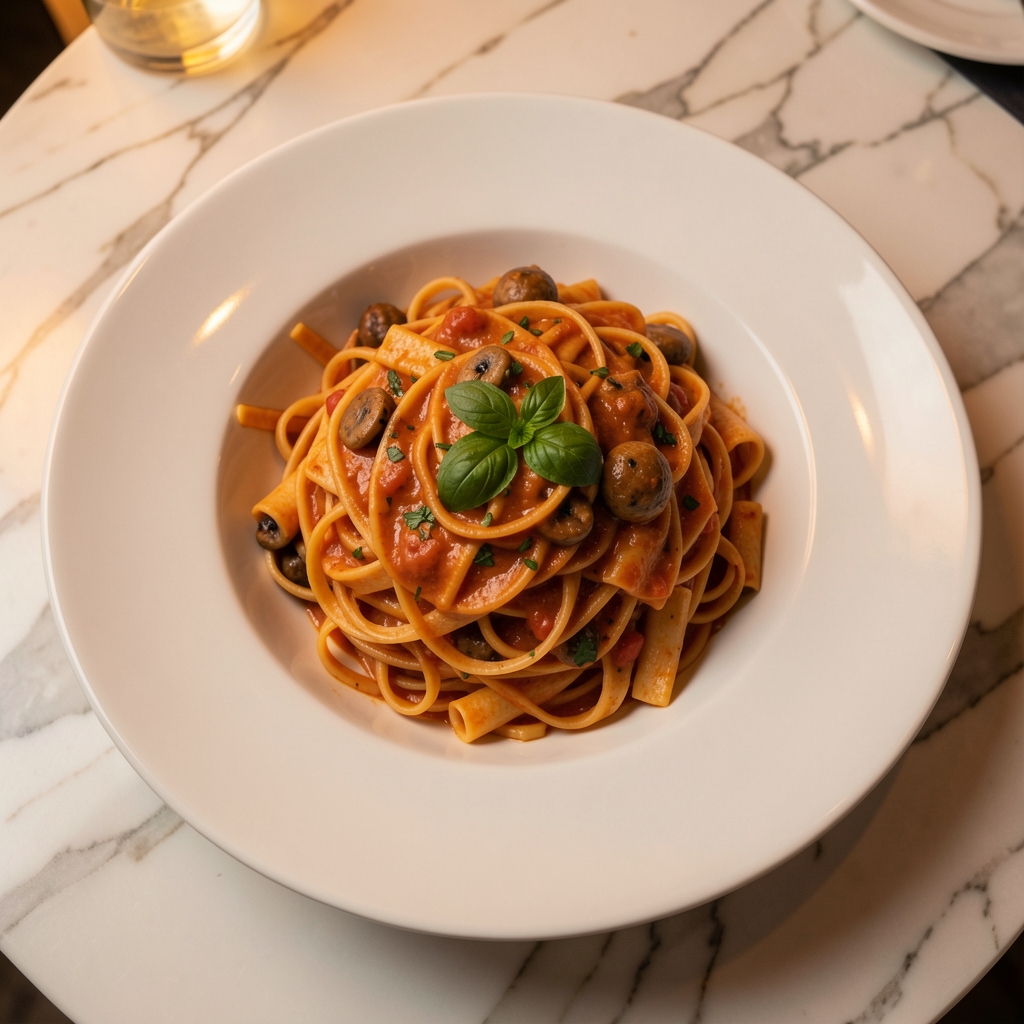
Eating without attention is perhaps the most consistent feature of the modern food environment. The hand that reaches for the biscuit tin is rarely directed by hunger; it is directed by proximity, habit, and the low-grade background noise of a mind occupied elsewhere. The calories accrued in this manner are invisible precisely because they are incidental.
Portion distortion describes the progressive misalignment between what a person believes they are consuming and what they are actually consuming. It is well documented in nutritional research and consistently found to be a factor in unintended weight gain. The mechanism is simple: packaging, plate size, and social context all influence how much a person serves and eats, independent of their hunger level.
The enlargement of portion norms has been gradual in England, tracking changes in retail packaging sizes and restaurant serving conventions since the 1990s. A ready meal that registered as a full serving in 2000 may be considered modest today. A medium coffee has expanded; a portion of chips has grown. The reference point for what constitutes a normal amount has shifted upward without individual awareness.
The effect of this drift is that someone eating what they genuinely believe to be appropriate portions may consistently be eating 15–20% more than they intend. Across a week, this is a substantial unregistered contribution to caloric intake — one that informal estimation methods will not capture because the reference points used for estimation are themselves distorted.
"The portion that feels normal is not a fixed biological reference. It is a cultural one — and it has been moving for thirty years."
— Blanover Notebook, Mindless Eating Field Series, March 2026
The liquid calorie problem is one of the most consistent findings in English dietary research. Beverages — coffee drinks, fruit juices, soft drinks, energy drinks, alcohol — contribute significantly to daily caloric intake in ways that are consistently underestimated by the drinkers themselves. The reason is partly psychological: liquids are not registered by the appetite system with the same weight as solid food.
A large coffee with full-fat milk and a flavoured syrup, the kind widely available at high-street chains, contains 300–400 calories. A glass of orange juice contains approximately the same calories as two oranges with none of the fibre that would slow glucose absorption and promote satiety. A 330ml can of a standard soft drink provides roughly 140 calories — rarely included in informal daily estimates.
For someone who drinks two coffees, a juice at breakfast, and a soft drink at lunch, liquid calories alone may total 700–900 calories — a figure that exceeds many full meals. These are not eaten, so they are not consciously registered as intake. The person who genuinely believes they eat moderately but consumes three specialty coffee drinks per day is operating under a systematic blind spot.

The shared workspace is a consistent source of unintended caloric intake. Biscuits at a meeting table, a communal bowl of sweets near reception, birthday cakes in the kitchen — these are features of English office culture that are understood socially as minor indulgences but function nutritionally as regular, recurring caloric contributions.
Research into workplace eating habits suggests that proximity is the primary driver: food that is visible and reachable is consumed at significantly higher rates than food stored out of sight. A bowl of sweets on a desk will be consumed; the same quantity of sweets in a closed drawer will largely remain. The environmental architecture of the office determines eating behaviour as much as individual intent.
For someone working in a standard English office environment, ambient snacking may contribute 200–400 calories per day beyond planned meals. These are consumed without hunger, without decision, and without registration. They arrive as the background noise of a social food environment.
Fast food occupies a distinct position in the English dietary week: it is understood as an exception — a convenience or indulgence — while functioning in practice as a regular occurrence for a significant proportion of the population. Survey data consistently identifies fast food consumption two or more times per week as common among English adults of working age.
The caloric density of fast food is markedly higher than home-prepared equivalents. A typical fast food meal — burger, chips, and a soft drink — registers between 900 and 1,400 calories depending on the outlet and choices made. This represents a significant proportion of a daily caloric allowance for most adults, consumed in a single seated occasion of fifteen to twenty minutes.
The frequency effect compounds. Someone eating fast food twice per week at an average of 1,100 calories per occasion, compared to a home-prepared equivalent of 600 calories, accumulates an extra 1,000 calories per week from this source alone. Over a year that is a substantial and consistent contribution to caloric surplus — one that remains invisible as long as fast food occasions are understood as exceptions rather than as a structural feature of the dietary week.
The common thread across mindless eating research is attention — or rather its absence. Eating that occurs while a screen is active, while a conversation is happening, while work is proceeding, is eating that the mind does not fully register. The eating occasion is incomplete in the experiential sense, and the satiety signal it should trigger is correspondingly incomplete.
Studies examining the effect of eating attention on caloric intake consistently find that distracted eating produces higher consumption and lower subsequent satiety than attentive eating, even when the food consumed is identical. The experience of eating — the sensory engagement, the pace, the social or environmental context — modulates the body's response to the calories received.
The practical implication is not a programme of mindful eating retreats but a simpler structural change: eating at a table, away from screens, with enough time to register what is being consumed. This is an unremarkable observation that nonetheless describes something absent from the majority of working English meals. The evidence-informed approach does not require transformation — it requires attention, which is considerably more available than it appears.
Portion norms have drifted upward by 15–20% over three decades, creating a systematic overestimation of what constitutes a moderate amount.
Liquid calories from coffee drinks, juices, and soft drinks can total 700–900 calories daily, consistently omitted from informal intake estimates.
The office food environment contributes 200–400 ambient calories per day through proximity and social habit, independent of active hunger.
Distracted eating produces lower satiety and higher consumption than attentive eating, even when the same food is consumed.
Articles published on Blanover Notebook are editorial in nature and reflect the writers' observations on everyday wellness practices. The content is not intended as professional advice, nor as guidance for the management of any specific condition. Readers with specific concerns about their daily routines are encouraged to speak with a qualified wellness professional.

Tobias Marsden is a guest writer at Blanover Notebook. His work examines inattentive eating, the social architecture of food environments, and the gap between perceived and actual dietary behaviour.
More from Blanover Notebook →